
Introduction
Understanding Capture Rate and Delivered Rate
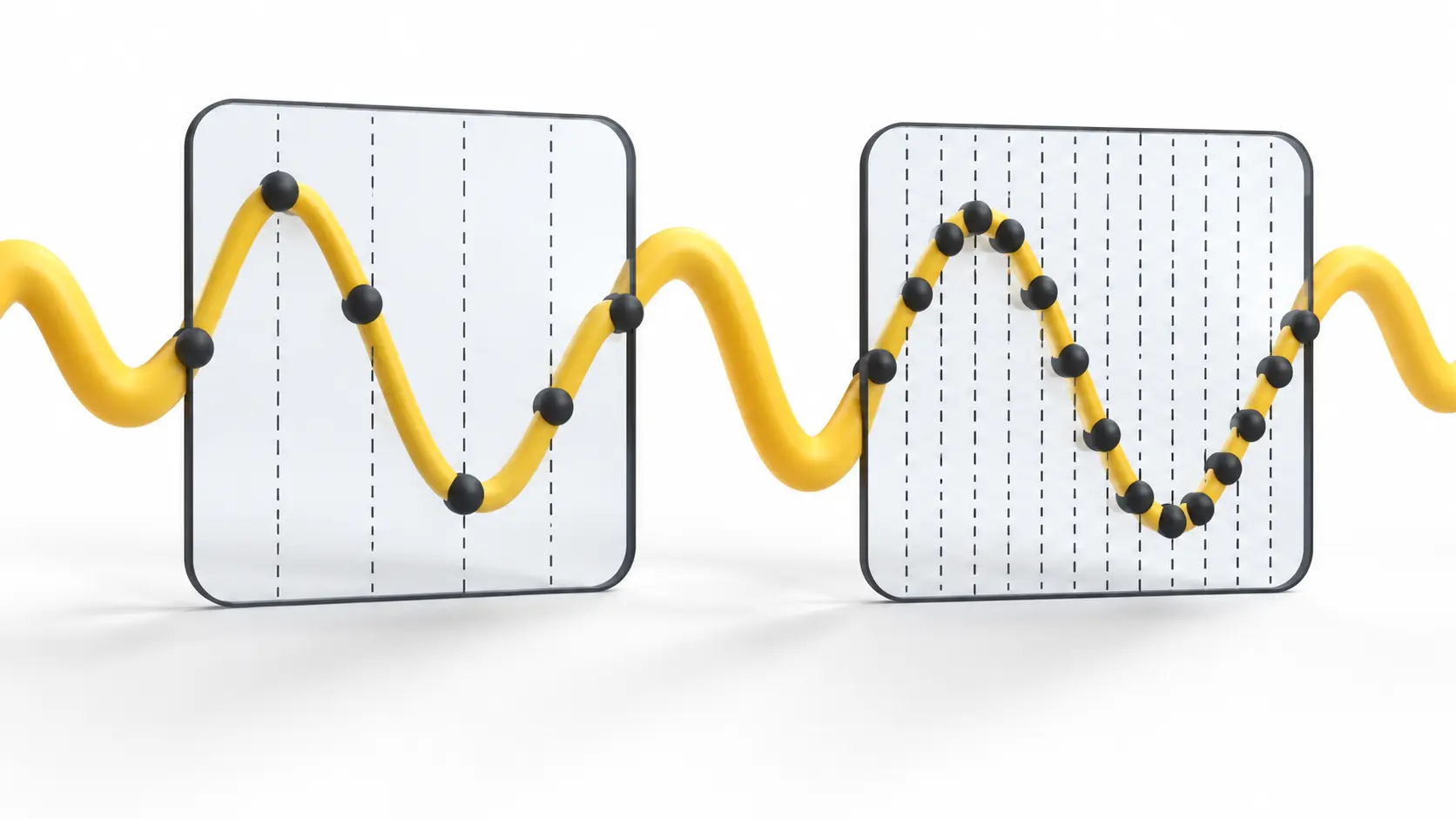
A recording's current rate does not tell its complete history. Original capture and delivered representation may differ because a file has been decoded, resampled, or exported through another system. The Library of Congress describes LPCM as sampled and quantized audio, while Audacity explains sample-rate concepts. For an illustrative interview archive, identify the known capture properties and the submitted copy separately. A file labeled with a high rate can still originate from a restricted-bandwidth source. Review the actual speech evidence rather than assuming the header describes every earlier stage.
Keep a conversion record naming the original and derivative. State why the change was needed, which properties were altered, and which source remains available for listening. This is a proposed editorial practice, not a feature requirement. Its value is to make later transcript corrections reproducible when several technically valid versions of the same recording exist and reviewers need to know which one produced the result.
References: Library of Congress: LPCM; Audacity: Sample Rates.
Why a Higher Rate Does Not Restore Missing Information
Interpolation, compatibility, and source recovery answer different questions. SciPy documents a filtering-based resampling operation; the Library of Congress's Audio Works statement prefers native over upsampled resolution in its preservation context. Neither means a higher-rate derivative contains newly captured speech detail. In an illustrative conversion, intermediate sample values can represent the existing signal at another rate, but they do not establish what a microphone failed to record. Describe the file honestly as a derivative rather than a newly recovered high-resolution original.
Task suitability should be evaluated directly. A lower-rate source may still support a faithful transcript, while a high-rate file with noise or clipping may be difficult. Do not treat a rate label as a substitute for listening to names, quantities, and qualifications. The practical decision is whether the representation fits the actual workflow and preserves the information the task requires, with limitations stated when it does not.
References: SciPy: Resampling operation; Library of Congress: Native-resolution preference.
1. Mechanisms of Rate Conversion
1.1 Sampling Limits and Aliasing
Nyquist frequency, bandwidth, downsampling, aliasing, anti-alias filtering, cutoff, and retained detail determine how rate reduction behaves. Torchaudio explains that frequencies beyond the new representation's limit can map into lower frequencies, while SciPy's decimation applies filtering before reducing samples. The editorial implication is to avoid simply discarding samples and assuming the output is equivalent. In an illustrative speech conversion, a badly controlled reduction can introduce artifacts that make a consonant harder to distinguish. The theoretical sampling condition does not itself establish transcription quality on noisy or nonideal recordings.
Use a speech-specific inspection after conversion. Listen to weak consonants, rapid phrases, and difficult background conditions from the same recording. A clean synthetic tone test can diagnose a resampler, but it is not a complete editorial acceptance test. If a critical distinction becomes uncertain, retain the original for review and revise the conversion path rather than presenting the derivative as an unquestioned equivalent.
References: Torchaudio: Aliasing and rolloff; SciPy: Decimation with anti-alias filtering.
1.2 Filter Settings and Boundary Behavior
Filter width, window choice, boundary assumptions, cutoff, and computational cost affect resampling. SciPy documents padding behavior and FFmpeg exposes resampler parameters. These controls do not provide a universal best setting for transcription. The proposed review checks the beginning and end of a file as well as its middle, because conversion assumptions can affect boundary behavior. In an illustrative interview that starts immediately with speech, verify the first audible syllable rather than judging only a comfortable central excerpt. Keep the settings identifiable so a changed result can be reproduced.
Do not combine several unrelated operations during the first comparison. If the derivative is also denoised, trimmed, compressed, and mixed to mono, a difference cannot easily be attributed to resampling. Establish one controlled conversion first, then evaluate additional operations separately when they are necessary. This turns a vague better-audio claim into an inspectable decision about a specific transformation.
References: SciPy: Polyphase boundary assumptions; FFmpeg: Resampler controls.
1.3 Metadata Relabeling and Playback Speed
Rate metadata, sample sequence, playback duration, pitch, and resampling must remain distinct. Python's wave documentation exposes rate and frame information, while Audacity explains rate settings. Reinterpreting the same samples at a different rate changes their time relationship; a proper rate conversion instead constructs a representation intended to preserve the source timeline. In an illustrative handoff, do not repair an unsupported input by changing only its label. Confirm that the delivered speech has the expected duration and natural timing, and identify any intentional speed change separately from ordinary conversion.
A timeline check can use recognizable passages near the start, middle, and end. If their relative positions change unexpectedly, investigate the conversion before reviewing timestamps. A transcript may look sensible even when the media was played at the wrong speed. Do not manually adjust only the text timing while leaving an unexplained media problem in the evidence chain.
References: Python: WAV rate and frame metadata; Audacity: Sample-rate interpretation.
2. A Controlled Conversion Workflow
2.1 Verify the Actual Input Requirement
Check source rate, encoding, channel structure, mode, and compatibility requirement before converting. Google and Azure document requirements for their own speech workflows, showing that rate is only one media property. Those specifications do not define another product's accepted inputs. In an illustrative production process, first try a supported original when appropriate; convert only for a documented need. A habitual conversion to one familiar rate can add complexity without providing evidence of better text, especially when the original was already accepted and usable.
For WhisperAITranscribe (an online audio and video transcription tool), use its supported file or publicly accessible URL workflow and choose the language actually spoken. Preserve any derivative separately from the capture and check result completeness. Available timestamps and editable text can help review the output, but they do not establish the internal rate or resampler. Do not borrow another service's PCM requirement and describe it as a verified requirement of this product.
References: Google Cloud: Audio encoding properties; Microsoft: Audio input stream conditions.
2.2 Inspect Duration, Channels and Peaks
Check duration, frame count, channels, peak behavior, and source correspondence after conversion. Libsamplerate notes that interpolation can produce peaks beyond the input sample range, while Python exposes media parameters useful for inspection. The proposed editorial method therefore includes listening and technical checks rather than assuming equal nominal duration guarantees an unchanged signal. In an illustrative derivative, a conversion may preserve the overall timeline yet create a new clipping problem when written to a restricted representation. Identify that issue before blaming the transcription workflow for newly distorted speech.
Do not normalize or limit the derivative blindly as an automatic repair. Record any additional level change and compare it with the original. A technical check can reveal a potential problem, but the acceptance decision should still consider whether the consequential speech remains supported. Keep the derivative's complete operation history so later reviewers know which result describes which media version.
References: Libsamplerate FAQ: Resampling peaks; Python: WAV parameters.
2.3 Compare Text Under the Same Review Policy
Paired recordings, fixed passages, consistent review, and declared settings make the result interpretable. Torchaudio and Speex document resampling quality and computational tradeoffs, but their properties do not measure the target product's recognition. In an illustrative pilot, process the original and one necessary derivative, then inspect the same names, quantities, and qualifications in each transcript. Record initial errors separately from successful manual corrections. A more readable edited version should not be compared with an unedited alternative as though both represented initial recognition quality.
Keep ambiguous source passages in the record. If neither version supports a confident interpretation, mark the uncertainty rather than selecting the output that sounds more plausible. The result may show compatibility success without a recognition improvement, or easier listening without different text. Those are legitimate findings when reported separately; they do not need to be turned into an exaggerated recovery claim.
References: Torchaudio: Quality and computation choices; Speex: Resampler quality tradeoff.
3. Applying Rate Decisions to Editorial Tasks
3.1 Lecture and Interview Archives
Preservation copies, upload copies, and review sources can coexist. The Library of Congress's Audio Works guidance provides preservation context, while its LPCM description explains the representation. In an illustrative archive, retain authorized native media and create a compatible derivative only when necessary. Do not replace the only original with an upsampled file and then call that file a superior capture. The transcription handoff should identify the source reviewers heard and the copy submitted for processing, particularly when exact quotation or later correction may matter.
Use representative passages across changing conditions. A speaker may move away from the microphone or introduce a difficult technical term late in the recording. A rate-conversion check based only on the opening can miss those cases. The review should follow the task's consequential content while preserving explicit uncertainty where neither original nor derivative provides enough evidence for a confident word choice.
References: Library of Congress: Audio Works formats; Library of Congress: LPCM representation.
3.2 Caption Timing and Source Lookup
Time correspondence and speech fidelity are separate acceptance questions. FFmpeg provides resampler and timing controls, while Python documents rate and frame parameters. In an illustrative caption workflow, verify that a reviewer can locate selected statements in the correct media copy after conversion. A transcript with correct words can still be awkward to review if its timestamps refer to a different start position or altered duration. Do not infer word-level timing accuracy from a successful rate conversion or from an output file that merely has plausible duration metadata.
Inspect the delivered subtitle artifact as well as the transcript view. If timing is adjusted later, document the source version and the reason. Avoid a chain of manual offsets whose origin is lost across collaborators. A useful handoff explains whether the timeline was preserved, intentionally trimmed, or otherwise changed, allowing the next editor to verify it without guessing which file is authoritative.
References: FFmpeg: Resampler options; Python: Frames and rate.
3.3 Derived Notes and Conflicting Candidates
A conversion result, a transcription candidate, and an editorial conclusion should remain distinguishable. SciPy's boundary behavior and Libsamplerate's peak warning illustrate that conversion is an operation to inspect rather than a neutral filename change. In an illustrative research note, two media versions may produce different spellings for an important term. Return to identified source passages and record why one candidate is accepted. Do not assume the higher-rate copy must be right or let a polished summary decide the source interpretation retroactively.
WhisperAITranscribe supports summaries, key points, and action items, but those outputs need review after the transcript is corrected. Preserve uncertainty when the source remains ambiguous, and keep the media identity attached to consequential notes. If a derived version resolves audibility, state that relationship; if it does not, retain the limitation. This makes reuse dependable without presenting rate conversion as automatic semantic repair.
References: SciPy: Resampling assumptions; Libsamplerate: Output peak behavior.
4. Selecting Settings and Acceptance Conditions
4.1 A Rate-Conversion Challenge Set
Include boundary speech, rapid phrases, quiet consonants, and difficult background conditions in the pilot. Torchaudio demonstrates aliasing and filtering tradeoffs; SciPy documents decimation before sample reduction. Those technical examples do not substitute for source-backed transcription review. The proposed test keeps one original and one controlled derivative, checks known media properties, and compares consequential words under a stable policy. Include passages that failed previously where permission allows, but also ordinary material so the test does not become a narrow puzzle tailored to one transformation.
Acceptance evidence should show complete media correspondence and supported important statements, with unresolved material clearly marked. Report whether the change helped compatibility, listening, or text quality. A test may support one purpose without supporting the others. State the actual settings and scope, and avoid claiming that one universal sample rate is optimal for every recording or every transcription system.
References: Torchaudio: Resampling evaluation examples; SciPy: Filtered decimation.
4.2 Feature Fit Without Imagined Signal Controls
Review input acceptance, language selection, editability, timestamps, speaker conditions, and export availability. WhisperAITranscribe can support these workflow elements under actual file, language, and permission conditions. Do not describe it as exposing the resampler libraries discussed here or guaranteeing a particular internal sample rate. A feature listing is not a measured conversion result. Choose a process in which reviewers can preserve the original, inspect the submitted copy, and identify the text version approved for delivery.
If subtitle export is part of the task, inspect the actual supported SRT or VTT output after correction. If the task is a searchable transcript, verify important terms and source lookup. The media conversion should serve the handoff rather than become a ritual applied to every file. Keep the acceptance questions focused on observable evidence instead of assumed technical superiority.
4.3 Conversion Effort and Operational Cost
Processing work, storage, media duration, and review effort contribute separately to cost. WhisperAITranscribe measures allowance by submitted duration, while resampling can change file size or processing demand without changing the recording's intended length. Speex and FFmpeg describe configurable quality and computational tradeoffs in their own libraries. Do not turn those properties into a claim about the product's speed. In an illustrative archive, test the required conversion once on representative material and avoid generating redundant derivatives that add management burden without new evidence.
A simple documented path can be more useful than many unexplained alternatives. Record observed effort and exceptions, then refine the workflow only when a change solves an identified problem. If the original already works and remains inspectable, no conversion may be needed. The objective is a dependable source-to-text process, not the largest set of technical settings or the highest rate displayed in a file inspector.
References: Speex: Resampler quality and complexity; FFmpeg: Resampling engines and parameters.
5. The Future of Source-Aware Conversion
5.1 Separate Compatibility From Recognition Benefit
Future evaluation should distinguish format compatibility, signal changes, and text consequences. Google and Azure document their own input properties, demonstrating why current workflow checks matter. A newly accepted rate or representation should trigger a controlled test rather than an automatic quality claim. The proposed process uses preserved originals and independently reviewed passages to show what actually changed. A result can establish successful decoding without proving improved recognition, and that distinction should remain visible in any report.
Keep historical conversion failures as regression material when permitted. Add new source conditions as the audience or recording setup changes. Do not claim that a previous pilot covers every future file with the same header. Media properties are useful context, but source noise, capture quality, and speaking content still affect the evidence available for transcription and the review needed before release.
References: Google Cloud: Input encoding considerations; Microsoft: Stream format requirements.
5.2 Better Boundary and Peak Verification
Boundary handling and peak behavior deserve visible checks in future conversion workflows. SciPy and Libsamplerate document effects that can be missed by looking only at nominal rate and duration. The proposed editorial arrangement records whether a derivative preserves opening and closing speech and whether later encoding introduced distortion. This is a test design, not a claim that an existing service automatically validates those conditions. Inspect representative real speech alongside any technical signal check so the method remains connected to the words and meaning the task requires.
For workflows involving WhisperAITranscribe, keep preprocessing outside unverified product claims and retain the submitted media identity. If a derivative changes a critical candidate, review the source rather than accepting the newest output by default. Preserve explicit uncertainty when necessary. Better verification should make the evidence chain clearer, not encourage an impression that rate conversion can reconstruct every detail missing from the capture.
References: SciPy: Boundary assumptions; Libsamplerate: Output peaks.
5.3 A Controlled Source-to-Text Handoff
A future process around WhisperAITranscribe can maintain a capture record, a conversion record, a timeline check, and an accepted transcript version in the team's own files. This is a manual proposal, not a public-API or native-integration claim. In an illustrative handoff, one editor verifies media properties, another reviews consequential speech, and the final editor checks the delivered artifact. Each stage should know which source version its observations describe, avoiding an apparently complete record assembled from mismatched media and text.
WhisperAITranscribe remains the transcription component while the organization owns conversion and approval decisions. When better input options become available, evaluate them on actual material and update the documented path. Do not replace source preservation with assumed automation. A clear, modest workflow can remain dependable across changes because it records the evidence and limits instead of relying on a rate label as proof of quality.
6. Conclusion
6.1 Key Insights for Resampling Decisions
Rate conversion requires source identification, sampling awareness, appropriate filtering, timeline verification, peak inspection, and text review. WhisperAITranscribe can be included in a controlled evaluation without inferring its internal processing. A higher-rate derivative is not a new capture, and a lower-rate accepted input is not automatically inferior for every task. The useful decision depends on supported workflow requirements and on whether consequential speech remains traceable to the original evidence.
The immediate priority is to know what operation was performed and why. Preserve the original, compare one necessary derivative, and separate compatibility from quality conclusions. When the source remains unclear, retain uncertainty or request clarification. A professional review can benefit from signal-processing tools while acknowledging that they cannot create an authoritative statement from information the recording does not support.
6.2 Practical Next Steps for a Conversion Pilot
Begin with a one-change pilot. Step 1: identify original media properties and the actual input requirement, preserving the authorized capture unchanged. Step 2: use WhisperAITranscribe with a supported original or documented derivative, select the spoken language, and note complete or preview scope. Step 3: check duration, channels, boundaries, and consequential transcript passages against the source, recording any changed uncertainty or distortion. Step 4: approve the delivered artifact only when its important content is supported and its media lineage is clear. Keep the settings stable during comparison so a result can be reproduced rather than explained only by memory.
Use the pilot to simplify the workflow where possible. If conversion adds no necessary compatibility or observable benefit, retain the supported original. If it is needed, maintain a tested path and reevaluate when source conditions change. The goal is to reduce ambiguity in the source-to-text handoff, not to pursue higher numbers in metadata as though they guaranteed better recognition.
6.3 Concluding Advice and Resources
Treat capture fidelity, conversion behavior, workflow compatibility, and transcript approval as separate decisions. Explore WhisperAITranscribe when its supported workflow fits the media, then inspect any necessary resampling against the preserved original. Audacity explains rate concepts and the Library of Congress provides preservation context, including native-resolution preference. Apply those sources to their actual purposes rather than turning them into universal ASR rules. A dependable transcript is supported by identifiable speech evidence and proportionate review, not by an inflated rate label or a conversion whose effects were never checked.
References: Audacity: Sample Rates; Library of Congress: Audio Works preservation context.
Questions and answers
Can a higher sample rate recover missing speech information?
Resampling changes a signal’s representation and compatibility; it cannot recreate speech information that the original recording never captured.
What should I check when resampling a recording?
Preserve the original and document why conversion is needed, which properties changed, and which version was submitted for transcription. Distinguish actual resampling from relabeling metadata; inspect duration, boundaries, filtering effects, and peaks before accepting a derivative for use.