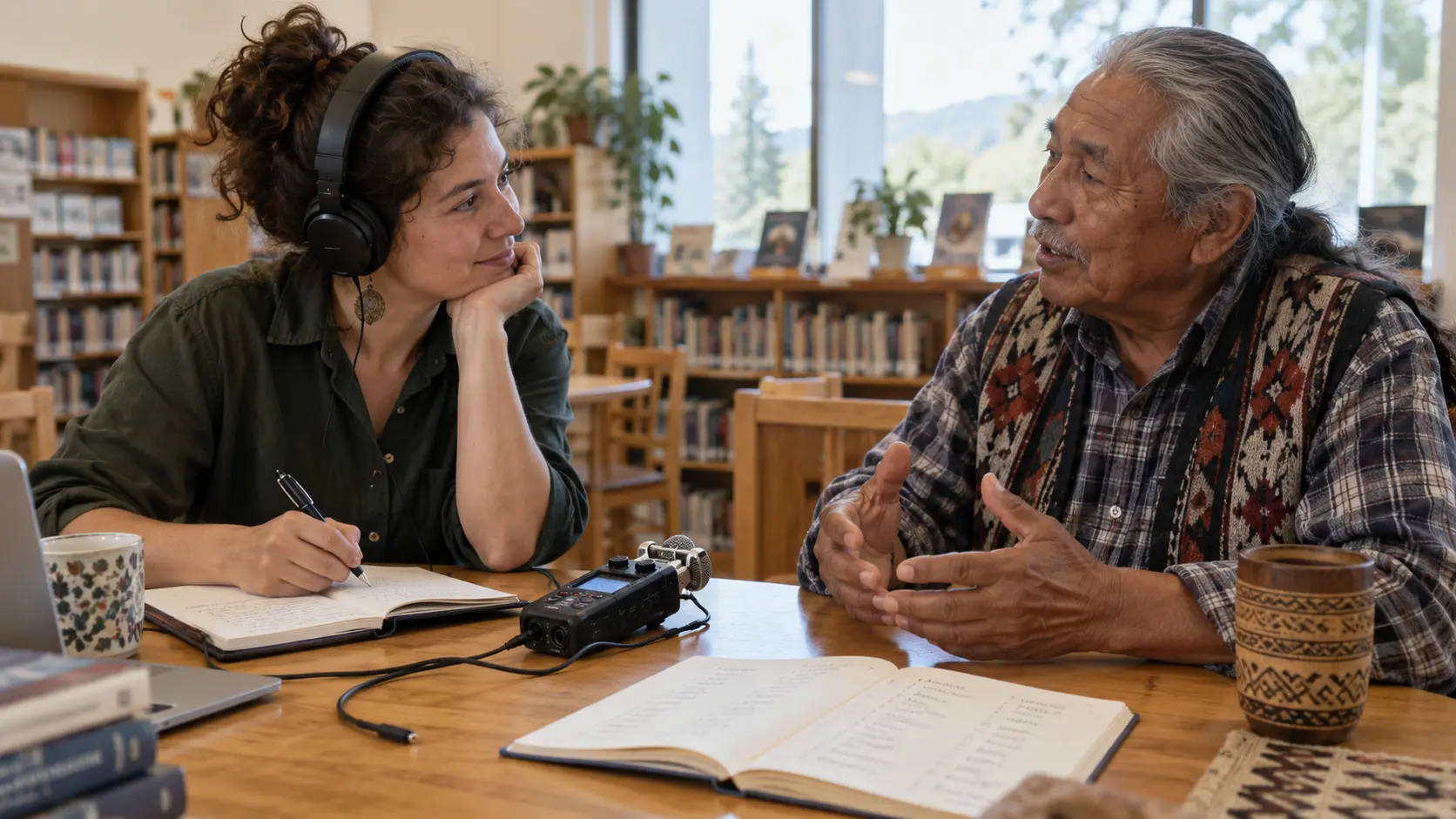

Introduction to Low-Resource Language Transcription
Understanding the Current Landscape of Language Coverage
The phrase low-resource describes a relationship between a task and available material, not a judgment about a language's value. A language may have substantial written content but limited transcribed conversational audio for a particular dialect or domain. Model availability therefore differs from task readiness. The MMS ASR card documents language-specific adapters, illustrating that broad coverage involves explicit configuration and data choices. It does not establish that every recording style or local vocabulary has been tested equally well.
For a professional archive, begin with a coverage question that a reviewer can answer. Can this workflow preserve the wording needed for an interview extract, a lecture transcript, or a searchable oral-history record? The answer requires a representative source and a competent reference, not a headline language count. A language's inclusion in an external research project also cannot be imported into an unrelated product's support list or presented as a guarantee of its performance.
References: MMS ASR model card and adapters; MMS task and data scope.
Why General Benchmarks Need Local Context
Read speech, spontaneous conversation, and domain-specific discussion impose different review demands. FLEURS is a defined multilingual evaluation resource, and its dataset card acknowledges a read-speech focus. A clean benchmark sentence can be useful without representing a noisy community interview or a speaker's local variety. The editorial acceptance decision should therefore include the source conditions and the intended use. A result from one setting is evidence about that setting, not an automatic license to publish unreviewed text from another.
Consider an illustrative archive project recording local agricultural knowledge. Speakers use regional plant names, alternate spellings, and occasional terms from a neighboring language. A draft can look orderly while replacing an unfamiliar plant name with a common word. The scenario is hypothetical and does not report a product result. It demonstrates why a test should include the archive's important vocabulary and representation choices, rather than proving only that an external benchmark recognizes the broader language label.
References: FLEURS evaluation scope; FLEURS read-speech limitations.
1. Foundations of Language Coverage
1.1 Distinguishing Recognition from Language Identification
Separate language identification, speech recognition, translation, dialect coverage, script choice, speaker organization, and human approval. A system that selects a language label has not necessarily produced accurate words. The MMS language-identification card and ASR card describe different tasks; their capabilities should not be merged into one vague multilingual claim. The archive's review standard must inspect the text itself and the source conditions, rather than treating a correct language label as evidence that every statement was preserved.
A task-specific trial in the agricultural example might first establish the intended language and then inspect local nouns, quantities, and causal explanations. If the label is right but the plant names are wrong, record a recognition or terminology failure rather than a language-identification success that hides it. If a translation is desired, evaluate it separately against reviewed source text. This decomposition makes an incomplete result informative instead of allowing one correct layer to certify the whole deliverable.
References: MMS language-identification model card; MMS ASR model card.
1.2 Data Coverage and Domain Mismatch
Training material, speaker diversity, domain vocabulary, acoustic conditions, and evaluation examples shape the evidence available for a model. MMS research uses particular multilingual sources; that is a coverage expansion, not proof of every conversational setting. The practical response is to identify mismatch explicitly. A model may recognize common narrative sentences but struggle with locally meaningful names or compressed technical explanations. The review should describe those categories instead of converting a general weakness into a claim that the language itself cannot be transcribed.
For the illustrative archive, select passages from several speakers and recording environments. Include ordinary explanations as well as the regional vocabulary that makes the collection valuable. Ask reviewers to distinguish an unfamiliar written convention from an acoustic error. An archive can otherwise underestimate useful recognition because its reference spelling is inconsistent, or overestimate it because a reviewer accepts a plausible common word in place of a rare but important term.
References: MMS data and task scope; FLEURS read-speech boundary.
1.3 Orthography and Community Review
Orthographic variation, romanization, diacritics, Unicode representation, and community conventions can complicate a written reference even when listeners agree on the speech. Unicode normalization explains character-sequence equivalence; it does not choose the community's preferred spelling. The proposed review process should make its representation policy explicit and seek appropriate language expertise. A technically consistent text can still be unsuitable if its spelling choices distort meaning or ignore the archive's intended readers.
A reference convention should allow known variants where the project requires them, while retaining the original source relationship. In the agricultural example, a plant name may have two accepted spellings. Record the preferred display form and the alternate search form separately. Do not silently replace a regional term with a nationally common one because it is easier for software to process. The purpose of normalization is usable representation, not erasing the linguistic distinctions the archive was created to preserve.
References: Unicode normalization forms; Language and script representation.
2. Quality Measures and Review Coverage
2.1 Accuracy on the Intended Language Task
Evaluate meaningful words, local terminology, negation, quantities, and review effort on the project's actual material. The jiwer usage documentation distinguishes comparison units and transformations, providing a technical reminder that a score depends on its input policy. A project should also inspect consequential content directly. One corrected plant name can matter more to the archive than several punctuation differences, even if a general token count assigns all edits similar numerical weight.
For WhisperAITranscribe (an online audio and video transcription tool), test the actual language option and representative file rather than importing an external model's coverage. The draft should become reviewable evidence only after qualified listeners inspect important passages. Optional speaker labels remain conditional on file and language support. No published multilingual result identifies the product's implementation or establishes its accuracy on an untested local variety. Record observed limitations and use them to decide whether the workflow is suitable for the intended archive.
References: jiwer comparison and transformation usage; Unicode text units and tailoring.
2.2 Scoring Units Across Writing Systems
Declare word segmentation, character comparison, normalization, variant handling, and reference construction before reporting an error rate. Unicode text segmentation notes that some writing systems need tailored boundary handling. A whitespace-based score may therefore misrepresent a language's textual units. A comparison should state its chosen policy and remain consistent across systems. Otherwise an apparent improvement can arise from changing the representation or tokenization rather than improving the preservation of the recorded speech.
Create a small diagnostic reference and inspect what the metric counts. Include a known spelling variant, an omitted regional noun, and a missing negation. This original exercise reveals whether the score aligns with the archive's acceptance concerns. Keep the consequential-error review separate from the metric. A numerical summary is useful only when readers can understand which units it compares and which important failures it may understate or hide through normalization.
References: Unicode text segmentation; jiwer character and word comparisons.
2.3 Explicit Human Review Coverage
Fluent listening, domain knowledge, spelling expertise, and review scope are different capabilities. Common Voice's research describes crowdsourced collection and validation, showing that multilingual resources require actual human work. For a professional deliverable, identify who can verify the source and what they checked. A glossary-assisted editor may resolve spelling without understanding a surrounding qualifier. That partial contribution is valuable, but it should not be described as complete linguistic approval of every sentence.
Mark unreviewed or disputed intervals in the team's records and distinguish them from verified text. A partial preview or a checked opening segment cannot establish the full recording's quality, especially when local vocabulary appears later. If suitable expertise is unavailable, limit the deliverable to what can be responsibly verified or commission an appropriate review. A consistent formatting style should not make incomplete coverage appear comprehensive to readers who cannot understand the original recording.
References: Common Voice collection and validation; FLEURS source and reference fields.
3. Applications of Bounded Language Coverage
3.1 Community Knowledge Archives
Community archives benefit from local vocabulary, source continuity, and respectful representation. The Oral History Association's guidance provides a professional context for preserving narrator relationships and expectations. The original editorial method proposed here treats unfamiliar terms as review priorities, not automatic errors to replace with common vocabulary. A searchable archive should make source statements usable while preserving what distinguishes the community's account, including terminology that a general-purpose recognizer or outside editor may not know.
In the agricultural scenario, retain the regional plant term with a verified explanation where appropriate. Keep the explanation clearly separate from the spoken statement, and preserve its source. If a specialist disagrees with the transcript's spelling, document the chosen convention and the unresolved alternative. Do not invent a consensus to make the archive look settled. The archive's value can include documented variation, provided readers can distinguish it from accidental transcription inconsistency.
References: Oral History Association principles; Common Voice community validation context.
3.2 Educational Material and Language Labels
Educational delivery needs clear language metadata and declared support boundaries. W3C's language-tag guidance explains how language information is represented in web content. Correct tagging can help present the intended text, but it does not establish accurate speech recognition or suitable learning material. A teacher should check specialized vocabulary, definitions, and instructions directly before relying on a transcript as a student resource. A visibly labeled language cannot compensate for an unchecked explanation or a wrongly transcribed technical term.
For a hypothetical lesson, compare the transcript's key definitions with the recording and the teacher's approved terminology. Add clarifying context as editorial material rather than silently inserting it into the speaker's words. If the transcript uses a standardized written variety that differs from the spoken one, explain that policy to the intended readers. The goal is usable access to the lesson without pretending that representation decisions were acoustically determined or universally preferred.
References: W3C language tagging guidance; Unicode representation normalization.
3.3 Search and Reusable Research Notes
Original terms, search aliases, and analyst summaries should remain linked but distinct. The MMS implementation repository supplies separate task and language configuration, illustrating why downstream reuse should not flatten all language information into a single generic text field. The proposed archive method keeps a reviewed source expression, any approved alias, and the interval that supports it. This lets researchers search unfamiliar vocabulary without rewriting the evidence into a standardized term that may have a different local meaning.
WhisperAITranscribe can provide editable text and timestamps as the transcription stage. The team's separate research system can associate reviewed terms with aliases and notes; no native integration is implied. If a later review changes a regional noun, revisit the summaries and coded observations that used it. A corrected source is insufficient if the archive continues to retrieve and interpret the statement through an earlier mistaken term that remains embedded in metadata.
References: MMS task and language implementation; Unicode text boundaries for retrieval.
4. Selecting a Low-Resource Review Workflow
4.1 Representative Sampling and Release Criteria
Choose local speakers, important domains, recording variants, and uncertain terms from the actual collection. The FLEURS card's read-speech limitation reinforces the need for task-specific sampling. The proposed release gate requires qualified review of consequential passages, a declared representation policy, and visible limits on unreviewed scope. It does not require pretending that every word can be established. A professional archive can deliver qualified evidence, but it should not certify complete accuracy from an unrepresentative demonstration.
A coverage map should describe which source conditions have been checked and which remain untested. Compare speakers and domains without turning a tiny sample into a population claim. If the archive later adds ceremonial speech, radio material, or another regional variety, extend the trial rather than reusing the original acceptance result automatically. The map is a planning tool, not a statistical guarantee, and should remain narrow enough that its conclusions match the observed material.
References: FLEURS dataset scope and limitations; MMS configuration and coverage.
4.2 Product Workflow and Unsupported Assumptions
For WhisperAITranscribe, record available language option, source version, review competence, term policy, unresolved intervals, and release status. Select the language actually spoken, and test conditional speaker labels only where supported. Do not describe an external model's language list as the product's support list, or infer universal dialect handling from a brand name. The trial should document what happened to the actual recording under the actual workflow, including any inability to obtain a usable draft.
If a workflow is unavailable for the required language, acknowledge that state directly. It is different from a supported workflow with imperfect recognition. The project may need specialist transcription or a separately evaluated system, but it should not claim that the existing product covers the task because a research paper covers a related language. Keep potentially partial free previews separate from full-file review, and do not estimate complete accuracy from whatever text happens to be visible initially.
4.3 Capacity, Expertise, and Archive Scale
Budget media-duration usage, qualified review, terminology work, and correction propagation separately. WhisperAITranscribe accounts for usage by media duration, while archive readiness also depends on language expertise and source complexity. Microsoft's custom-speech overview describes evaluation with reference text for its own system, illustrating the general need for a reviewed comparison. It does not provide a labor estimate or customization feature for the target product. Plan from observed work rather than an assumed multilingual efficiency gain.
Measure how much material reviewers can check responsibly and how often specialist consultation is required. If the project cannot support full review, define a narrower release policy and mark the unreviewed remainder clearly. Expanding the archive should not mean expanding claims beyond evidence. A smaller collection with reliable locators, local vocabulary, and documented coverage can serve research better than a larger corpus whose important distinctions were normalized away and never checked by knowledgeable listeners.
References: Microsoft custom-speech evaluation context; Common Voice reviewed data context.
5. Future Directions in Language Coverage
5.1 Broader Coverage with Narrower Claims
Future progress should connect new language support, local evaluation, and deliverable readiness. The MMS research demonstrates a substantial expansion of speech technology through explicit data and task choices. A useful follow-up evaluation asks whether that expansion preserves the vocabulary and conversational conditions of the intended archive. Language count is a starting point for testing, not a substitute for it. The professional claim should remain tied to the observed task even when the available model catalog becomes much larger.
Save difficult examples and their correction categories so later workflows can be compared meaningfully. An updated system should be tested against regional nouns, important qualifiers, and unfamiliar recording conditions rather than only the clean material it already handles. This original regression practice gives the archive a way to observe progress without borrowing a research headline or assuming that the latest model necessarily improves every local variety and every professional use.
References: MMS language-coverage research; FLEURS multilingual evaluation scope.
5.2 Contextual Resources and Human Expertise
Domain resources and reviewed references may support future systems, but their availability should not be confused with implemented product controls. Google's adaptation documentation describes vocabulary biasing for supported models in its own service. The editorial opportunity is to keep useful terminology and verified examples organized for review and future evaluation. A glossary should help identify a plausible term; it should not become a license to insert that term when the audio is insufficient or when local meaning remains disputed.
For WhisperAITranscribe, treat glossaries and community expertise as separate human review resources unless an actual supported control is established. Do not claim model adaptation, custom training, or a public API. A future feature could be evaluated using the archive's saved references, but the current deliverable must still meet its acceptance standard. The responsible boundary is observable capability plus qualified review, not an imagined backend built from features described by another vendor.
References: Google model adaptation and support limits; Microsoft custom-speech boundaries.
5.3 Revision-Aware Community Deliverables
A workflow around WhisperAITranscribe can connect reviewed expressions, search aliases, public transcripts, and research interpretations through explicit versioning. Imagine a local expert correcting a plant name after several researchers have coded the associated passage. The useful workflow identifies the affected artifacts and asks their owners to revisit them. This is an original archive design, not a claim that the transcription product automatically synchronizes corrections or performs community approval through an external integration.
WhisperAITranscribe can remain the draft-preparation stage while the archive manages source relationships and release decisions. A manual review handoff can be adequate if it preserves corrections and their scope. The important improvement is not making every artifact update instantly; it is preventing a corrected source from leaving contradictory terminology and interpretation scattered across the collection without a way to discover and repair the mismatch.
6. Conclusion
6.1 Key Insights and Future Trajectory
Coverage, task fit, dialect context, orthography, qualified review, and release scope should remain explicit. For WhisperAITranscribe, test the actual available workflow rather than importing another model's language catalog. Preserve local terminology, declare scoring and representation rules, and distinguish unreviewed text from verified evidence. The most important outcome is a usable record whose claims do not exceed what the source and reviewers can establish, even when the language has limited resources for the particular transcription task.
Technical progress and language expertise are complementary. Better drafts can reduce some editing work, but they do not eliminate the need to understand the source or choose a suitable representation. Keep the archive's distinctive vocabulary and documented variation visible so efficiency does not come from erasing the very information the collection was intended to preserve.
6.2 Practical Next Steps for a Coverage Audit
Begin with a bounded language trial. Step 1: define the deliverable, select representative source conditions, and establish qualified reviewers and a writing convention. Step 2: test suitable files with WhisperAITranscribe using the actual available spoken-language setting, without inferring support from external research. Step 3: compare important words, terms, qualifiers, and representation choices with a reviewed reference and record unresolved coverage. Step 4: release only material that meets the declared policy, then extend the audit when new speakers, domains, or language varieties enter the collection.
Use observed corrections and review capacity to decide whether to scale. Preserve difficult examples for later comparisons, and keep partial previews separate from complete-file assessment. The audit should make the archive's limitations easier to understand, not hide them behind a single average score or a long list of nominally supported languages.
6.3 Concluding Advice and Resources
Test actual recordings, preserve local meaning, declare review coverage, and maintain traceable corrections. WhisperAITranscribe can be evaluated as a draft-preparation workflow where the required language is available. Language tags can organize the resulting text, but they cannot certify its accuracy. Choose a release scope that matches the evidence, and seek appropriate human expertise where consequential content remains uncertain. A useful archive is built from defensible statements, not from assuming that nominal language support makes every recording ready for publication.
References: W3C language tags and representation; Unicode text-unit conventions.
Questions and answers
How should I evaluate transcription for a low-resource language?
Low-resource language transcription needs evidence from the intended dialect, source conditions, and deliverable, supported by reviewers who understand the recording.
What should I check when language evidence is limited?
Assess training coverage, writing conventions, dialect fit, and recording quality separately; a language menu or broad multilingual study does not establish uniform conversational accuracy. Build a coverage audit with representative recordings, competent references, declared scoring units, and explicit unresolved scope, including consequential vocabulary and local representation choices.